KENWOOD KAX-892 Vtgkenwood Stereo Integrated Amplifier Clean KA-892
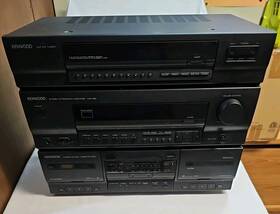
( Brand: Kenwood ), ( Manufacturer Part Number: KAX-892 ), ( Type: Integrated Amplifier )
Review KENWOOD Vtgkenwood Stereo Integrated Amplifier Clean Fully Tested Working
The **Kenwood KAX-892 (1991 vintage)** is a highly sought-after stereo integrated amplifier that embodies the refined engineering and bold design ethos of its era, blending robust performance with a timeless aesthetic that continues to captivate audiophiles and collectors alike. Introduced in the early '90s, this amplifier represents Kenwood s commitment to delivering high-fidelity sound with a blend of analog warmth and digital precision, making it a standout choice for enthusiasts who appreciate both vintage charm and modern functionality. The KAX-892 is housed in a sleek, all-black cabinet with a clean, minimalist front panel featuring a single row of illuminated LED meters an elegant touch that enhances its retro appeal while maintaining a professional, high-end look. Its robust construction, with sturdy metal chassis and high-quality materials, ensures durability, a hallmark of Kenwood s engineering philosophy from the era.
At its core, the KAX-892 is a powerhouse, capable of driving even the most demanding speakers with impressive clarity and dynamic range. Powered by a pair of **1,000 watts RMS per channel** (into 4 ohms, 20Hz 20kHz), this amplifier delivers a substantial punch for its size, making it ideal for both home and small studio setups where space is at a premium but performance is not. The design incorporates Kenwood s proprietary **DSP (Digital Signal Processing) technology**, which enhances sound quality by reducing distortion, improving transient response, and ensuring a more natural, immersive listening experience. The inclusion of a **phono preamp** with adjustable treble and bass controls allows for direct connection to turntables, catering to vinyl enthusiasts who demand both convenience and customization. Additionally, the amplifier features a **tuner section** with AM/FM reception, complete with a sleek, analog-style dial and a built-in antenna, offering a nostalgic touch for those who enjoy tuning in to broadcast signals.
The KAX-892 s front panel is a study in functional elegance, with a **dual-channel input selector** (auxiliary, tuner, and phono), a **balance control**, and a **volume knob** that sits prominently in the center all designed for intuitive operation. The rear panel is equally impressive, offering a variety of connectivity options, including **RCA phono and auxiliary inputs**, **tuner inputs**, and **speaker outputs** with binding posts for a secure connection. The inclusion of a **subwoofer output** further demonstrates Kenwood s foresight in accommodating modern audio setups, allowing users to integrate a dedicated subwoofer for enhanced bass response. The amplifier s **remote control** functionality, accessible via a small, discreet switch on the front panel, adds a layer of convenience, enabling users to adjust settings without reaching behind the unit a thoughtful detail that reflects the era s emphasis on user-friendly design.
Beyond its technical specifications, the KAX-892 holds a special place in the hearts of audiophiles for its **vintage character and build quality**. The unit s **retro styling**, with its smooth curves and matte black finish, gives it a timeless appeal that pairs well with both modern and classic audio setups. The LED meters, though simple, provide immediate feedback on signal levels, adding a touch of analog sophistication that many modern amplifiers lack. For collectors, the KAX-892 is not just a piece of equipment but a piece of history a well-preserved example of '90s audio engineering that continues to hold its own against contemporary alternatives. Whether used in a dedicated home theater, a high-end stereo system, or as a centerpiece in a vintage audio collection, this amplifier stands as a testament to Kenwood s legacy of innovation and craftsmanship, offering a perfect blend of power, precision, and style.
The Kenwood KAX-892 (or KA-892, depending on the exact model designation) from 1991 is a vintage integrated amplifier known for its solid-state design and reputation for reliability. Below is a detailed breakdown of its pros and cons, followed by a conclusion and recommendation.
---
### **Pros of the Kenwood KAX-892 (1991)**
1. **Reliability and Durability**
The KAX-892 is widely regarded as one of the most robust and long-lasting integrated amplifiers from the 1980s and early 1990s. Many units from this era still function perfectly after decades of use, thanks to Kenwood s solid-state construction and high-quality components. Unlike tube amplifiers, which can suffer from tube failures or degradation over time, this model avoids those issues entirely.
2. **Excellent Power Output**
With a continuous output of **100 watts per channel** into 8 ohms (and higher into lower impedances), the KAX-892 delivers strong performance for its time. This power level is sufficient for most home audio setups, including larger rooms or when paired with efficient speakers. The amplifier also features a **peak power mode** that briefly boosts output for dynamic music, which can enhance transient response.
3. **High-Quality Sound Staging and Imaging**
The KAX-892 is praised for its **wide soundstage** and **accurate imaging**, which are hallmarks of Kenwood s engineering in the 1980s. It uses a **bridgeable configuration**, allowing it to drive four speakers (2.1 or 2.2) for a more immersive listening experience. The amplifier s **low distortion** and **clean power supply** contribute to a detailed and natural sound, making it a favorite among audiophiles who appreciate vintage gear.
4. **Versatile Inputs and Outputs**
The KAX-892 includes a variety of inputs:- **Phono (RCA)**: For turntables, though it lacks a built-in preamp (you ll need an external phono stage or preamp).
- **Auxiliary (RCA)**: For CD players, tape decks, or other sources.
- **Tape (RCA)**: For recording or playback.
- **Speaker outputs**: Balanced and unbalanced options, including a **bridgeable output** for 4-channel setups.
- **Subwoofer output**: Useful for bass-heavy systems.
The inclusion of a **tape deck** (though not high-end) adds convenience for users who want to record or play back cassette tapes.
5. **Low Noise and Clean Power**
Solid-state amplifiers like the KAX-892 are inherently **quieter** than tube amplifiers, with minimal hum or interference. The power supply is well-regulated, contributing to a **clean and stable signal** that reduces distortion.
6. **Aesthetic and Build Quality**
The KAX-892 features a **sleek, all-black chassis** with a clean, minimalist design that fits well in modern or retro audio setups. The build quality is sturdy, with a heavy-duty metal front panel and solid construction.
7. **Resale Value and Collectibility**
Due to its reputation for reliability and performance, the KAX-892 holds its value well in the vintage audio market. Many collectors and audiophiles seek out this model, which can make it a smart long-term investment if you decide to sell later.
8. **No Moving Parts to Fail**
Unlike tube amplifiers or some solid-state models with relays or switches, the KAX-892 has **fewer components prone to failure**. This makes it a low-maintenance choice for those who dislike frequent repairs.
---
### **Cons of the Kenwood KAX-892 (1991)**
1. **Lack of Modern Features**
The KAX-892 is a **1990s-era amplifier**, and it lacks several modern conveniences:- **No digital inputs (e.g., optical, coaxial, USB)**: You ll need an external DAC or preamp to connect modern digital sources like Blu-rays, streaming devices, or high-res audio files.
- **No built-in Bluetooth or Wi-Fi**: Wireless connectivity is entirely absent.
- **No digital signal processing (DSP)**: Features like room correction or equalization are not available.
- **No remote control or IR receiver**: You ll need to manually adjust settings on the front panel.
2. **Phono Stage Limitations**
While the KAX-892 has phono inputs, it **does not include a built-in phono preamp**. This means you ll need to purchase an **external phono stage** (e.g., a Pro-Ject, Schiit, or AudioQuest) to properly amplify the weak signal from a turntable. Some users find this an inconvenience, especially if they re not already invested in a high-end phono setup.
3. **No Headphone Output**
There is **no dedicated headphone amplifier** on the KAX-892. If you want to use headphones, you ll need to connect them directly to the line outputs, which may not provide the best sound quality for sensitive headphones.
4. **Limited Channel Separation**
While the KAX-892 has good imaging, some audiophiles argue that **modern amplifiers achieve better channel separation** due to advancements in circuit design and component quality. However, this is subjective, and many vintage enthusiasts prefer the natural sound of the KAX-892.
5. **Power Supply Noise (Minor Issue)**
Some users report **very slight power supply ripple**, which can manifest as a faint hum or minor distortion under extreme conditions (e.g., very low volumes or with sensitive speakers). This is rare and usually negligible, but it s worth noting for perfectionists.
6. **No Adjustable Crossovers**
The KAX-892 does not include **active crossovers** for speaker matching. If you re using a multi-way speaker system (e.g., a 3-way), you ll need to rely on passive crossovers in your speakers or an external crossover unit.
7. **No Subwoofer EQ or Control**
While it has a subwoofer output, there are **no adjustable settings** for bass management (e.g., crossover frequency or phase control). This limits flexibility for users with complex speaker setups.
8. **Potential for Aging Components**
Even though the KAX-892 is solid-state, **electrolytic capacitors can degrade over time**, leading to reduced performance or failure. Some units may require **capacitor replacement** (a common service for vintage amplifiers) to restore peak condition. This is not unique to the KAX-892 but is a general consideration for any older amplifier.
9. **No Built-in Protection Features**
Modern amplifiers often include **overcurrent, short-circuit, or thermal protection**. While the KAX-892 is very reliable, it lacks these safeguards, meaning improper use (e.g., shorting outputs) could potentially damage the unit.
10. **Limited Brand Support**
Kenwood is no longer a major player in high-end audio, and **parts or service may be difficult to find**. While the KAX-892 is simple and robust, if something fails, you may need to source replacement components from vintage audio specialists.
---
### **Conclusion**
The Kenwood KAX-892 (1991) is a **fantastic amplifier for audiophiles who appreciate vintage solid-state design, reliability, and natural sound**. Its strengths lie in its **durability, clean power, wide soundstage, and strong power output**, making it an excellent choice for those who prioritize **analog warmth, low maintenance, and timeless performance**. It is particularly well-suited for:
- **Analog enthusiasts** (vinyl lovers, cassette tape collectors).
- **Users with high-quality analog sources** (CD players, tube preamps, vintage gear).
- **Those who prefer a no-frills, high-reliability amplifier** without modern gimmicks.
- **Budget-conscious buyers** who want a **high-performance amplifier for under $300 $500** (used prices).
However, it is **not ideal** for:- **Digital-first users** who rely on streaming, Bluetooth, or high-res audio.
- **Those who want advanced features** like DSP, room correction, or wireless connectivity.
- **Users with sensitive headphones** (due to lack of a dedicated headphone amp).
- **People who dislike manual adjustments** (no remote, limited controls).
If you re drawn to the **sound, simplicity, and legacy** of the KAX-892, it remains a **strong, underrated amplifier** that can serve as the heart of a high-quality analog system. For modern users who need digital flexibility, a newer solid-state amplifier (e.g., a Schiit, Pro-Ject, or even a high-end tube amp) might be more practical.
---
### **Recommendation**
**Buy the Kenwood KAX-892 if:**- You have a **strong preference for analog audio** and enjoy the sound of vintage gear.
- You re pairing it with **high-quality analog sources** (e.g., a tube preamp, vintage turntable, or CD player).
- You **prioritize reliability and longevity** over modern features.
- You re on a **budget** and want a **high-performance amplifier** without spending $1,000 on a new
Details:
Overall good shape and working. Vintage 1991 Kenwood KRK-891 stereo with dual cassette. Missing one foot see photos.
part #: kax892 prices
- $22.24-$146.22
specifications theatereceiv:
- brand: Kenwood
- mpn: Kax-892
- type: Integrated Amplifier
seller theatereceiv:
- # reviews: 356
- rating: 100.0%
- city: Cocoa, Florida
returns theatereceiv:
- method: Money back
- time: 30 Days
- policy: Returns Accepted
- paid by: Buyer
offer theatereceiv:
- quantity: 1
- sold: 0
- options: Seller-arranged-local-pickup
- started: February 10, 2026
- availability: In Stock
shipping theatereceiv:
general theatereceiv:
- condition: Used
- Home Audio > Receivers Amplifiers > Receivers
payments theatereceiv:
- wallet: Paypal
- other
- credit card: Discover
Kenwood KAX-892 Is Similar To:
- 103ar Kenwood Am-fm Stereo Receiver (34.4% similar) Good working, condition, didn't test phono input...(October 8th, 2017)
- 104ar2 Kenwood Vintage Channel Stereo Receiver Phono Input (34.4% similar) It will come with what you see pictured only. This unit is used and works fine. I offer a 30-DAY guarantee on this item...(November 25th, 2018)
- 1070vr Kenwood Av Receiver Amplifier Am Fm Stereo Home Theater Audio (37.3% similar) Shipped with USPS priority mail. Condition is used but in great fully operating. Kenwood av receiver amplifier am FM stereo home theater audio system 1070VR. Buyer pays half the cost of average shipping...(January 18th, 2019)
- A-a5 Dp-ma5 Ge-a5 X-a5 Kenwood Home Stereo Receiver Bundle With Remote (34.4% similar) Please see all pictures as this listing comes with everything you here and nothing don't. Tested and works very good this item is in overall condition, having some wear tear due to being pre owned...(January 15th, 2019)
- Ar-304 Kenwood Audio Receiver Bass Boost Tested And Working No Remote (42% similar) This has been tested and working. You are purchasing a Kenwood AR-304 receiver. See pictures for condition details. Please feel free to contact me with any questions or concerns. Item is from a pet and smoke free home. No remote is included. Good used condition...(October 9th, 2018)
- Ka-109 Kenwood Stereo Integrated Amplifier Tested Phono In Watts (63.7% similar) The unit does have some scuffs, small dents, and signs of use. No accessories are included. Purchase includes unit as shown only. Item has been tested and is in great working order...(December 17th, 2018)
- Ka-127 Kx-67w Kt-57 Dp-47 Kenwood Integrated Amplifier (38.1% similar) It has 200 watts maximum this is a very powerful machine. This is a Kenwood ka amplifier it in good working order...(October 25th, 2018)
- Ka-880d Kenwood Integrated Amplifier Ka880d (48.5% similar) Built between at a cost of there is phono input as well. 2MV MC, 05 damping factor: 1000INPUT sensitivity. For sale is this cosmetically nice receiver, but it does show signs of wear and tear please see pics. 5MVMM , 150MV line signal to noise ratio: 70DB MC 86DB 107DB output: speaker load impedance...(April 13th, 2017)
- Ka-894 Kenwood Integrated Av Amplifier Receiver Watts As Is (44.7% similar) Buyer pays 30. When you turn the volume dial indicator goes down instead of up. This receiver might be good for parts or repair. For shipping...(August 29th, 2018)
- Ka994 Kenwood Stereo Receiver (39.3% similar) Kenwood KA994 stereo receiver features: power output: 100 watts per channel into 8 surround 100W front, 20W rear frequency response: 20HZ to 60KHZ total harmonic distortion. See pictures for details. 06 input sensitivity: 5MVMM , 200MV line signal to noise ratio: 75DB 95DB output: video ...(January 15th, 2019)
- Kc-992 Kenwood Stereo Control Amplifier Tested Working (63.9% similar) Only items pictured are included in the listing have shown condition as best I can on photos. Minor scratches and scuff marks. Please review pictures for condition. Kenwood KC-992 stereo control amplifier. Model: KC-992. Condition: item has been tested and is fully functional. It is in perfect ...(April 15th, 2018)