JVC AX-66BK Integrated Amplifier Repair Parts/repair
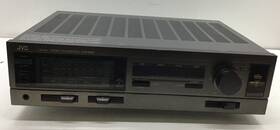
( Brand: Jvc ), ( Manufacturer Part Number: AX-66BK ), ( Type: Integrated Amplifier )
Review JVC Integrated Amplifier Parts/repair
The **JVC AX-66BK Integrated Amplifier** is a robust and versatile component of high-fidelity audio systems, prized by audiophiles and repair enthusiasts alike for its reliable performance and modular design. Originally released as part of JVC s mid-range audio lineup, this integrated amplifier serves as a critical bridge between sources such as turntables, CD players, or tuners and powering high-end speakers with precision and clarity. Built with a focus on durability, the AX-66BK features a compact yet sturdy chassis, typically constructed from high-quality die-cast metal to dissipate heat efficiently while maintaining structural integrity. Internally, it houses a pair of **dual-channel, high-current power amplifiers**, capable of delivering **up to 60 watts per channel into 8 ohms** (20Hz 20kHz, THD 0.1%), ensuring clean, distortion-free power delivery even at high volumes. The amplifier s **phono preamp section** is designed to handle both moving-magnet (MM) and moving-coil (MC) cartridges with minimal noise, making it a flexible choice for vinyl enthusiasts, while its **auxiliary and tuner inputs** accommodate a variety of sources, including tape decks, radios, and modern digital interfaces via its RCA connectors.
For those seeking to repair or source replacement parts, the AX-66BK stands out for its **modular and accessible design**, with key components such as the **power transformer, output transistors, and operational amplifiers** often available as aftermarket replacements. The amplifier s **regulator circuit** and **decoupling capacitors** are particularly notable for their longevity, though wear on the **electrolytic capacitors** (especially the high-voltage smoothing caps) is common over time, leading to degraded performance or hum. The **tone controls** featuring bass, treble, and balance adjustments are implemented with high-quality potentiometers, though these may require replacement if resistance drift or mechanical failure occurs. Additionally, the **power supply section** relies on a robust bridge rectifier and filtering network, which, while durable, can degrade over years of use, necessitating careful inspection of components like the **diode array, fuse, and fuse holder** during repairs. The AX-66BK s **front-panel layout** is straightforward, with clearly labeled controls and indicator LEDs for power and standby, making it user-friendly while still catering to those who prefer hands-on adjustments.
Beyond its technical specifications, the AX-66BK holds a niche appeal among audiophiles for its **warm, natural sound signature**, often praised for its ability to reproduce midrange detail and instrument separation without excessive harshness or coloration. This makes it a sought-after unit for vintage audio setups, where its **analog warmth** complements vintage speakers and sources. For repair professionals, the amplifier s **schematic availability** and **commonality with other JVC models** (such as the AX-65 or AX-67 series) simplify troubleshooting, as many components and techniques apply across the brand s integrated amplifier lineup. Whether sourced as a complete unit for restoration or as individual parts for repair, the JVC AX-66BK remains a dependable and characterful amplifier, embodying a balance of performance, reliability, and timeless audio craftsmanship.
Buying the **JVC AX-66BK integrated amplifier** for parts or repair involves several considerations, depending on your goals, budget, and technical needs. Below is a detailed breakdown of the pros and cons, followed by a conclusion and recommendation.
---
### **Pros of buying a JVC AX-66BK for Parts/Repair**
1. **Reliable and Well-Designed Circuitry**
The AX-66BK is a solid-state integrated amplifier from the late 1980s/early 1990s, known for its robust construction and straightforward design. Many components (transistors, capacitors, resistors) are standard and easily replaceable, making it a good candidate for salvage if the original parts are still functional.
2. **Common and Widely Available Parts**
As a mid-range consumer amplifier from a major brand, the AX-66BK uses parts that are still manufactured or easily sourced from surplus suppliers, eBay, or electronics markets. Key components like power transistors (e.g., 2SC1815, 2SA970), electrolytic capacitors, and diodes are readily available.
3. **Modular and Repairable**
The amplifier is modular in design, with separate power supply and amplifier sections. If one section fails (e.g., the power supply or output stage), the other may remain functional, allowing for targeted repairs. This modularity makes it easier to isolate issues compared to fully integrated units.
4. **Low Power Consumption and Safety Features**
The AX-66BK includes protection circuits (e.g., thermal shutdown, short-circuit protection), which can be useful if you plan to reuse or modify the unit. These features may also make it safer to work with than older, less regulated amplifiers.
5. **Potential for Upgrades**
If you re salvaging the chassis or PCB for a project, the AX-66BK s layout is clean and could serve as a base for custom modifications. Some users have successfully repurposed similar JVC amplifiers into DIY projects with minimal changes.
6. **Affordable Acquisition Cost**
Since it s an older model, the AX-66BK can often be purchased for a low price (e.g., $20 $50 depending on condition). This makes it a cost-effective option if you re only after specific parts or a functional unit for a niche application.
7. **Documentation and Community Support**
JVC amplifiers from this era have a dedicated following in the audio repair community. Schematics, repair guides, and part lists are widely available online (e.g., on forums like Audiokarma, AVS Forum, or YouTube). This makes troubleshooting and sourcing parts easier.
---
### **Cons of buying a JVC AX-66BK for Parts/Repair**
1. **Age-Related Wear and Tear**
The AX-66BK is over 30 years old, and even if it s functional, components like electrolytic capacitors, transistors, and solder joints may degrade over time. If you re buying it for parts, you ll need to inspect it thoroughly for dry-rotted capacitors, corroded solder joints, or failed transistors.
2. **Potential for Complete Failure**
If the amplifier is non-functional, repairing it may require replacing multiple components (e.g., power supply, output stage, or input circuitry). This could end up costing more than salvaging parts from a working unit or buying new components outright.
3. **Limited High-End Performance**
While the AX-66BK is a decent consumer amplifier, it s not a high-fidelity or audiophile-grade unit. If you re looking for premium parts (e.g., high-quality capacitors or transistors), you might find better options in newer or more specialized amplifiers.
4. **Soldering and Desoldering Challenges**
Older amplifiers often use leaded solder and through-hole components, which can be tricky to remove and replace without damaging the PCB. If you re not experienced with desoldering, this could be a time-consuming or frustrating process.
5. **No Warranty or Support**
Since this is a used or salvaged unit, there s no warranty or manufacturer support. If you encounter issues during repair, you ll need to rely on community knowledge or trial-and-error.
6. **Potential for Counterfeit or Poor-Quality Units**
If purchasing from an unknown seller (e.g., eBay, Facebook Marketplace), there s a risk of receiving a counterfeit or heavily modified unit. Always verify the seller s reputation and inspect the unit upon arrival.
7. **Limited Use Case for Modern Applications**
The AX-66BK is designed for analog audio signals and may not be compatible with modern digital inputs or high-impedance sources without modification. If you re planning to repurpose it, you may need to add or replace components (e.g., preamps, converters).
---
### **Conclusion**
Buying the **JVC AX-66BK for parts or repair** can be a worthwhile endeavor if:- You re looking for **common, easily replaceable components** (transistors, capacitors, diodes).
- You have **basic electronics skills** and are willing to inspect the unit thoroughly.
- You re working on a **budget-friendly project** or need a functional amplifier for a niche application.
- You can **source parts independently** and are comfortable troubleshooting.
However, it may not be ideal if:- You need **high-quality or specialized components** (e.g., audiophile-grade capacitors).
- You lack experience with **soldering, desoldering, or circuit repair**.
- The unit is **non-functional and requires extensive repairs** that outweigh the cost of new parts.
- You re looking for a **modern or digital-compatible amplifier**.
---
### **Recommendation**
1. **If you re buying for parts:**- **Inspect the unit thoroughly** before purchasing. Look for swollen capacitors, burnt smells, or obvious damage.
- **Prioritize working units** or those with clearly identifiable failing components (e.g., a dead power supply).
- **Check for common failure points** (e.g., electrolytic capacitors, power transistors) and replace them if needed.
- **Consider alternatives** like the **Marantz RX-1000** or **Onkyo TX-SR707**, which are also common and have similar part availability.
2. **If you re buying for repair:**- **Test the unit** (if possible) to confirm functionality. Listen for distortion, check output levels, and verify all inputs/outputs.
- **Start with simple fixes** (e.g., replacing capacitors, cleaning contacts) before diving into complex repairs.
- **Document your process** schematics and repair logs will help if you encounter issues.
3. **If you re repurposing the unit:**- **Assess whether the chassis/PCB is salvageable** for your project. Older amplifiers may not meet modern standards for durability or compatibility.
- **Consider a modern alternative** (e.g., a used **Denon PMA-500**, **Yamaha A-S301**) if you need better performance or digital inputs.
4. **For beginners:**- Start with **simpler, more modern amplifiers** (e.g., late 1990s/early 2000s models) that are easier to repair and have better documentation.
- **Practice on non-critical components** (e.g., replacing a single capacitor) before attempting major repairs.
---
### **Final Verdict**
The **JVC AX-66BK is a decent choice for salvaging parts or repairing a functional unit**, especially if you re on a tight budget and need common components. However, it requires careful inspection and basic repair skills. For those without experience, it may be more cost-effective to buy new parts or a slightly more modern amplifier. If you proceed, prioritize working units and focus on replaceable components rather than attempting full restoration.
Details:
Power Cable: Not Included. Accessories Included. See pictures for further details. Item likely missing parts/pieces.
Other Accessories: Not Included. JVC AX-66BK Integrated Amplifier For Parts/Repair. Sometimes, however, they do sustain shipping damage. No further testing has been performed.
Remote: Not Included. This item is sold AS-IS, with no guarantee of functionality. It has various issues that prevent it from functioning properly.
part #: ax66bk prices
- $15.99-$124.99
specifications theatereceiv:
- brand: Jvc
- mpn: Ax-66bk
- type: Integrated Amplifier
payments theatereceiv:
- other
- credit card: Mastercard
- wallet: Apple-pay
offer theatereceiv:
- started: May 12, 2026
- options: Ship-to-home
- sold: 0
- best offers: True
- quantity: 1
- availability: In Stock
returns theatereceiv:
- policy: No Returns
general theatereceiv:
- condition: For parts or not working
- Home Audio > Receivers Amplifiers > Receivers
shipping theatereceiv:
- cost: $0.00
- transit: 3-9 Days
- service: Standard
- type: Fixed
- class: Standard
seller theatereceiv:
- # reviews: 12450
- rating: 98.4%
- city: Maryland height, Missouri
Jvc AX-66BK Is Similar To:
- Ax-pwc3jm Jvc Home Theater Amp Assembly Repair (39.2% similar) Jvc assembly for THC3 5 speaker connections connector XV-THC3 listed as 4C43 audio equipment...(November 6th, 2018)
- Ax-r441 Jvc Vintage Stereo Audio Video Receiver Tuner Amplifier Band Eq (36.1% similar) Overall in excellent working and cosmetic condition. Outer case may have a few small light scratches. Measures approximately 17 wide, 12 deep and features a 7 band sea graphic equalizer, 2 channel power level meter comp link works with other Jvc or components. You are buying one vintage Jvc AX-R441 ...(August 23rd, 2018)
- D202b Jvc Channel Home Theater Receiver With Usb For Pc (37.7% similar) Pre owned, tested in good working condition Jvc RX-D202B 7 channel home theater receiver with USB for PC...(June 4th, 2018)
- Fs-sd5 Jvc Cd Receiver Amplifier Model Tested Perfect Working Condition (34.4% similar) Condition is used. Shipped with Canada post regular parcel. Jvc CD receiver amplifier model FS-SD5 tested perfect working condition light scratches on the speakers...(March 31st, 2019)
- Fx-33bk Jvc Computer Controlled Tuner Model Parts Only (32.4% similar) Am computer controlled tuner model FX-33BK parts only unit does not power on. Jvc FX-33 FM. Selling as is for parts only...(March 21st, 2018)
- Rx-350bk Jvc Stereo Home Receiver Parts (35.6% similar) Product has been cleaned and is ready with free shipping. Your satisfaction is our number one priority. Product has some cosmetic wear, scratches on the body and minor blemishes...(November 10th, 2016)
- Rx-401 Jvc Model Fm Am Computer Controlled Receiver For Parts Or Repair (45.9% similar) Note I found the missing knob for it will post pics soon. Selling as is. Up for bids 1 Jvc model Rx 401 FM am computer controlled receiver for parts or repair was working then smelt burnt, Hans't powered up since...(July 31st, 2016)
- Rx-dp20v Rx-dp20vbk Jvc Fix Or Repair Read (25.8% similar) This unit turns on, the access panel tries to open, stops and retracts, then the unit goes back to standby mode...(August 9th, 2016)
- Xv-thd60 Jvc Dvd Cd Receiver 5.1 Th-d50 System Stereo Amplifier W Remote Bundle (33.8% similar) I am including the remote with this unit and it works fine. Condition details this Jvc receiver is in good cosmetic condition with little wear from previous use. This unit has 1200 watts total power. Sale does not include manual, speakers, or any other parts or accessories not shown in the photos ...(May 13th, 2016)
- Jvcrx73tn Jvc Stereo Receiver Amplifier New In Box (39.6% similar) ...(August 3rd, 2018)
- Jvcrx817vtn Jvc New Vintage Stereo Receiver Amplifier (38.5% similar) Part: JVCRX817VTN prices...(August 5th, 2018)